Oil leak repair in Ogden, UT, starts with pinpointing where the oil is escaping before removing any gaskets. Arnold Auto Repair services engine oil leaks on Ford, Chevrolet, GMC, Toyota, Honda, Subaru, and other domestic and imported vehicles. Our services include valve cover gaskets, oil pan gaskets, rear main seals, timing cover reseals, and camshaft and crankshaft seals.
We begin with a UV dye leak detection kit and a clean-and-recheck process to identify the exact source. A wet valve cover can sometimes hide a leak from higher on the engine block. Our written warranty backs every qualifying repair, and most leak jobs take between two hours and a full day, depending on which seal is failing.
Valve cover gasket replacement is the most common oil leak repair we perform. A failing gasket may allow oil to run down the engine block or burn on the exhaust manifold, creating a distinct hot-oil smell. We remove the cover, clean the mating surfaces, and replace the OEM engine gasket and grommets. We also inspect the PCV valve during the service. A stuck PCV valve can increase crankcase pressure and push oil past a new gasket.
Oil pan gasket repair addresses drips that form beneath the engine after the vehicle sits overnight. Road salt exposure during Weber County winters can corrode the pan flange and accelerate the leak. We drop the pan, scrape both sealing surfaces down to clean metal, and install the correct gasket or RTV specification for your engine platform.
Rear main seal replacement is a larger job because it commonly requires separating the transmission from the engine. Timing cover resealing is a separate repair that requires access to the front of the engine. We complete timing cover reseals while the front cover is already removed.
This approach is often more efficient than paying to open the engine twice. Our engine gasket repair experience matters most during these repairs. The correct torque sequence and surface preparation can determine whether the seal lasts for 100,000 miles or leaks again after 10,000.
Engine oil leak repair is one part of our broader engine diagnostics work at Arnold Auto Repair. Visit the page for related services, such as engine repair, check engine light diagnostics, and diesel repair.
Whether the vehicle can be driven depends on the leak rate, oil level, warning lights, and where the oil is escaping. Check the oil level and contact our team before driving if you see active dripping, smoke, or an oil-pressure warning. However, visible drops on the driveway or a hot-oil smell indicate that the leak has progressed beyond seepage and needs attention.
Amber to dark-brown fluid beneath the engine may be engine oil, but the source and fluid type should be confirmed through inspection. We use a UV dye leak detection kit to trace the drip back to its actual origin instead of guessing.
A burning smell after highway driving on I-15 or US-89 usually means oil is dripping onto the exhaust manifold or catalytic converter. The leak may come from a valve cover or upper timing cover seal. Extended freeway heat cycles push aging gaskets past their sealing tolerance, and the smell often shows up before any visible drip.
If you are adding a quart between oil changes without seeing blue exhaust smoke, oil seepage diagnosis is the next step. If the low-oil-pressure warning appears, pull over safely and switch off the engine. Follow the owner’s manual, check the oil level if it is safe to do so, and do not continue driving until the cause is addressed.
We ask when the leak started, whether you have added oil, and where you see drops on the ground. This narrows the diagnostic path before the vehicle goes on the lift.
We degrease the engine, add UV dye to the oil, and run the vehicle to operating temperature. UV dye helps us trace the leak to its likely source. Intermittent or overlapping leaks may require additional cleaning and reinspection. This distinction is important because a rear main seal and the rear corner of a valve cover can drip in the same area.
You receive a written estimate with the failing component named, the labor hours required, and the parts cost. Nothing is approved or started without your sign-off.
We install OEM or OEM-equivalent gaskets and seals, then torque the covers to factory specifications in the correct sequence. If a related wear item, such as a PCV valve, contributed to the failure, we replace it as part of the repair.
We clean the repair area, run the engine to temperature, and recheck under UV light to confirm the leak is resolved before you pick the vehicle up.
Ready to schedule your engine oil leak repair?
Service categories
Get a free quick solution
Oil leak repair cost depends heavily on which seal is failing and how much labor is required to reach it. A valve cover gasket on an accessible inline engine is at the low end, while a rear main seal that requires transmission removal sits at the top.
We provide a written estimate before any work begins. You can review the full parts and labor cost before approving the repair.
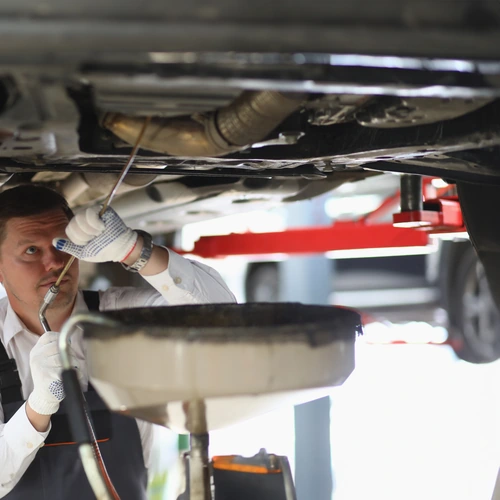
Every oil leak repair at Arnold Auto Repair starts with a documented diagnosis and written estimate. Our technicians install OEM or OEM-equivalent gaskets and seals as the standard, and our written warranty on parts and labor backs qualifying repairs.
We have been repairing engines in Ogden since 1997, and as a father-and-son team now in our second generation, we stand behind the work in writing. If a qualifying repair is not performing as expected, bring it back, and we will address the concern according to the written warranty terms.


Arnold Auto Repair serves drivers across Ogden, Harrisville, North Ogden, West Haven, Layton, Kaysville, Farmington, Bountiful, Brigham City, Huntsville, and Syracuse. Most oil leak repairs at our Wall Avenue location are completed within one business day. Loaner vehicles or our courtesy shuttle can help keep you moving while we complete the work.
A small oil seep is generally safe for short trips, but a visible drip or a low oil pressure warning is not. Continuing to drive on low oil pressure can cause bearing damage and catastrophic engine failure within minutes.
The most common causes are hardened valve cover gaskets, deteriorated oil pan gaskets, worn rear main and camshaft seals, and a stuck PCV valve raising crankcase pressure. Age, heat cycles, and high mileage are the primary drivers behind each of these failures.
The timeframe depends on which seal is failing. A valve cover gasket replacement, the most common oil leak repair, typically takes about two hours. A rear main seal or timing cover reseal often takes a full day. On some vehicle platforms, reaching the seal requires removing the timing cover or separating the transmission from the engine.
Yes. We use a UV dye leak detection kit that traces the exact origin of the leak, which prevents replacing the wrong gasket and paying twice for the same fix.
A small oil leak can lead to low oil pressure and severe engine damage. Address driveway drips or a burning smell after your commute before the oil pressure light comes on. Call Arnold Auto Repair to get the leak diagnosed correctly the first time and get back on the road with the repair documented in writing.