Most people don’t think about car maintenance until a problem forces their hand—a warning light, a strange noise, or that sinking feeling when the engine doesn’t sound quite right. But staying one step ahead doesn’t just save money—it keeps your car safer, longer-lasting, and far more dependable on every commute around Ogden UT.
Here at Auto Repair Shop, we work on vehicles every day that could have avoided big repairs with just a little preventive care. These core maintenance habits don’t require advanced mechanical knowledge, just consistency and awareness.
Think of this guide as a practical walk-through of what your car really needs to stay healthy—without the overwhelm.
Why Car Maintenance Matters More Than People Think
Your car is a system of interconnected components. When one part wears down, it often stresses five others. Routine maintenance keeps everything operating smoothly so you’re not replacing major components earlier than necessary.
Proper upkeep leads to:
- Improved safety
- Better fuel efficiency
- Longer vehicle lifespan
- Fewer breakdowns
- Improved resale value
- A smoother, quieter drive
Let’s break down what you should prioritize.
1. Regular Oil Changes
Oil is the lifeblood of your engine. When it becomes dirty or low, your engine has to work harder, heats up faster, and wears down quicker.
How often?
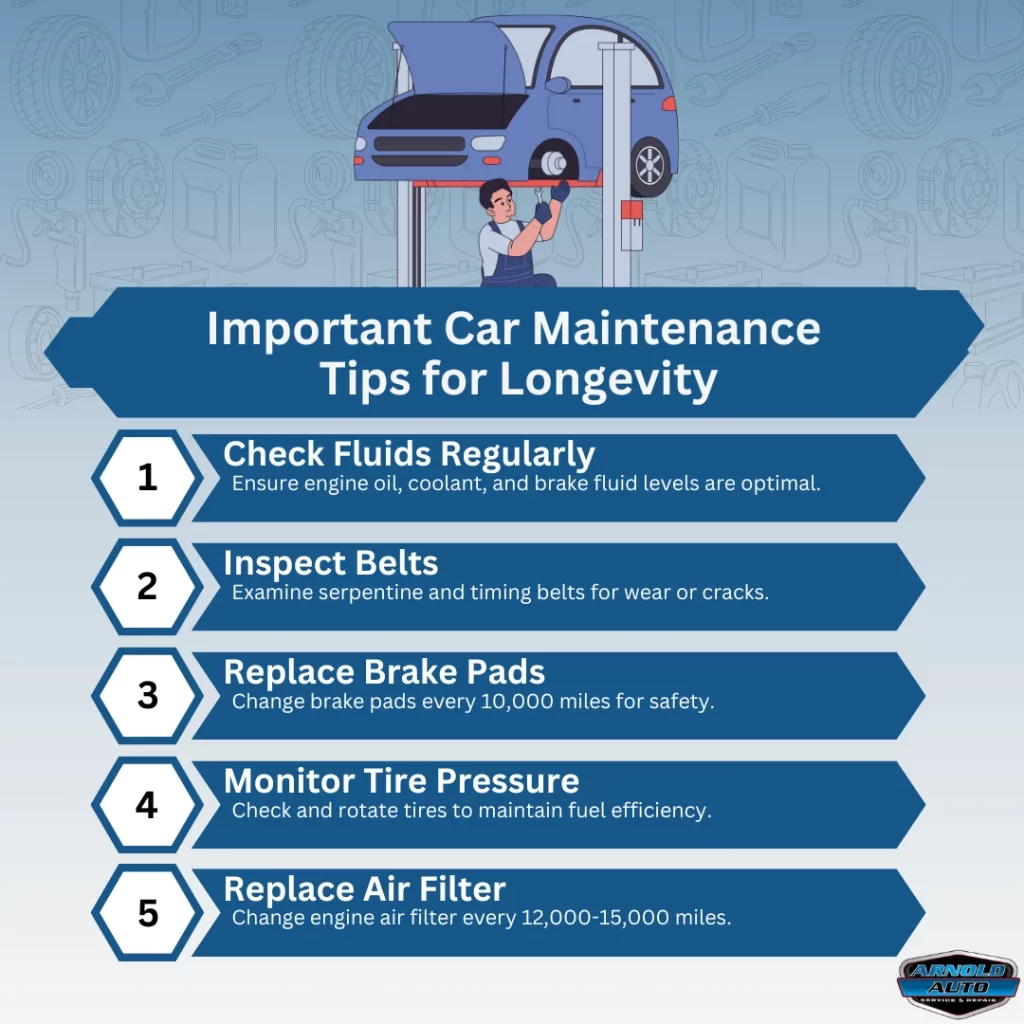
Typically every 3,000–5,000 miles for conventional oil, or 6,000–7,500 for synthetic. Your driving habits in Ogden’s climate also play a role—hot summers, cold winters, and mountain roads all stress the engine more.
Why it matters:
Skipping oil changes is one of the top causes of major engine damage. Dirty oil leads to sludge, friction, overheating, and expensive failures.
2. Check and Maintain Tire Health
Tires connect your car to the road. Bad tires = compromised control. Good tires = safe driving and better fuel efficiency.
What to maintain:
- Proper inflation
- Regular rotations (every 5,000–7,500 miles)
- Adequate tread depth
- No cracks, bulges, or uneven wear
Why Ogden drivers need this:
Cold winters and summer heat swings cause pressure fluctuations. Mountain roads and highway potholes can knock alignment out quickly, accelerating tire wear.
3. Replace Air Filters Regularly
Your car has two air filters:
Engine air filter:
Keeps dirt out of the engine. If it’s clogged, your engine can’t breathe properly, losing power and efficiency.
Cabin air filter:
Filters the air you breathe inside the vehicle. A clogged cabin filter creates odors, weak airflow, and mustiness.
How often?
Generally every 12,000–15,000 miles, but dusty environments—like many areas around Ogden UT—require more frequent changes.
4. Keep Up with Fluid Levels
Your vehicle depends on more than oil.
Key fluids to monitor include:
- Coolant
- Brake fluid
- Power steering fluid
- Transmission fluid
- Windshield washer fluid
Low or burned fluids can lead to overheating, brake failure, hard steering, or transmission damage—none of which are cheap problems.
If you’re ever unsure, you can get a quick evaluation through the experts at Engine Diagnostics in Ogden UT.
5. Replace Worn Brake Components Early
Brakes rarely fail suddenly—they get noisy first. Listen for:
- Grinding
- Squealing
- Pulsating pedal
- Soft or spongy pedal feel
Ignoring early brake warning signs can lead to rotor damage, loss of braking performance, or dangerous stops.
The ASE (National Institute for Automotive Service Excellence) highlights brake system checks as essential safety maintenance.
6. Monitor Battery & Electrical Health
If your car hesitates to start or lights dim during idle, your battery may be weakening.
Signs you need a battery check:
- Car struggles to start
- Electrical accessories slow down
- Corrosion on battery terminals
- Battery more than 3–5 years old
Weather in Ogden UT—especially winter cold—dramatically reduces battery performance.
7. Stay on Top of Suspension Wear
Suspension affects comfort, handling, and tire life. If your car feels bumpy, pulls to one side, or makes clunking noises, it may be time for an inspection.
Suspension issues often get worse quickly because one worn part stresses everything around it.
8. Don’t Ignore the Check Engine Light
A check engine light doesn’t automatically mean expensive repairs. Sometimes it’s a loose gas cap. Other times it’s a misfire that needs attention before it becomes serious.
If the light flashes, treat it as urgent.
Frequently Asked Questions
What Car Maintenance Should Be Done Monthly?
A quick monthly check can prevent trouble later. Look at:
- Tire pressure
- Oil level
- Coolant level
- Windshield washer fluid
- Dashboard warning lights
- Exterior lights (headlights, brake lights, turn signals)
Doing these simple checks can help catch small issues before they become big repairs.
Seasonal Tips for Ogden Drivers
Because Ogden experiences four dramatic seasons, your maintenance routine should adapt.
Winter:
- Check battery health
- Keep your gas tank above half
- Inspect heater and defroster
- Ensure good winter wiper blades
Summer:
- Monitor coolant
- Check A/C performance early
- Ensure tires aren’t overinflated from heat
When to See a Professional
DIY maintenance is great, but some things require professional tools, lifts, training, and diagnostic equipment.
Schedule a professional inspection if you notice:
- Strange noises
- Warning lights
- Smells (burning, sweet, or chemical)
- Poor fuel economy
- Vibrations or pulling
- Hard starting
- Leaks under your vehicle
Routine inspections help extend your vehicle’s life and prevent costly repairs.
Conclusion — A Little Maintenance Goes a Long Way
Keeping up with small maintenance tasks doesn’t just protect your vehicle—it prevents stressful breakdowns, boosts performance, and keeps your car running smoothly around Ogden UT all year long.
Whether you need routine service, diagnostics, or help sorting out a warning light, Arnold Auto Repair is here to help.