Most car owners know they should maintain their vehicles, but creating an actual schedule for it? That’s where things get fuzzy. Life gets busy. Work, errands, kids, weather—everything competes for your attention. And before you know it, that little sticker in the windshield is three months overdue, or you realize you can’t remember when the transmission fluid was last changed.
But a car maintenance schedule doesn’t need to be complicated. It’s simply a plan that helps you keep your vehicle healthy, reliable, and safe—without scrambling during a breakdown or guessing what needs attention next.
Here in City Of Ogden, Utah—where drivers face snow, summer heat, mountain roads, and occasional stop-and-go downtown traffic—a good maintenance schedule saves not only money but stress.
This guide walks you through how to build a personalized, easy-to-follow maintenance plan for your vehicle, based on your driving habits and the Utah climate.
Why a Maintenance Schedule Matters More Than You Think
A schedule keeps you ahead of problems instead of reacting to them. Instead of surprise breakdowns and unexpected repair bills, you get:
- Longer vehicle lifespan
- Better fuel efficiency
- Fewer expensive failures
- Safer driving
- Peace of mind
- A more predictable maintenance budget
Step 1: Understand Your Driving Style
Your maintenance schedule should match how you drive.
Ask yourself:
- Do I drive mostly city streets or highways?
- Short trips or long commutes?
- Light driving or heavy hauling?
- Frequent mountain driving?
- Daily use or occasional?
Short, stop-and-go trips (like running errands around Ogden) wear out engines, brakes, and fluids faster.
Long highway trips are easier on the engine but harder on tires and cooling systems.
Mountain and canyon driving can stress brakes and transmissions.
Your answers will shape the rest of your schedule.
Step 2: Break Your Schedule Into Time & Mileage Intervals
Organizing by intervals makes maintenance predictable and manageable. These ranges work for most vehicles.
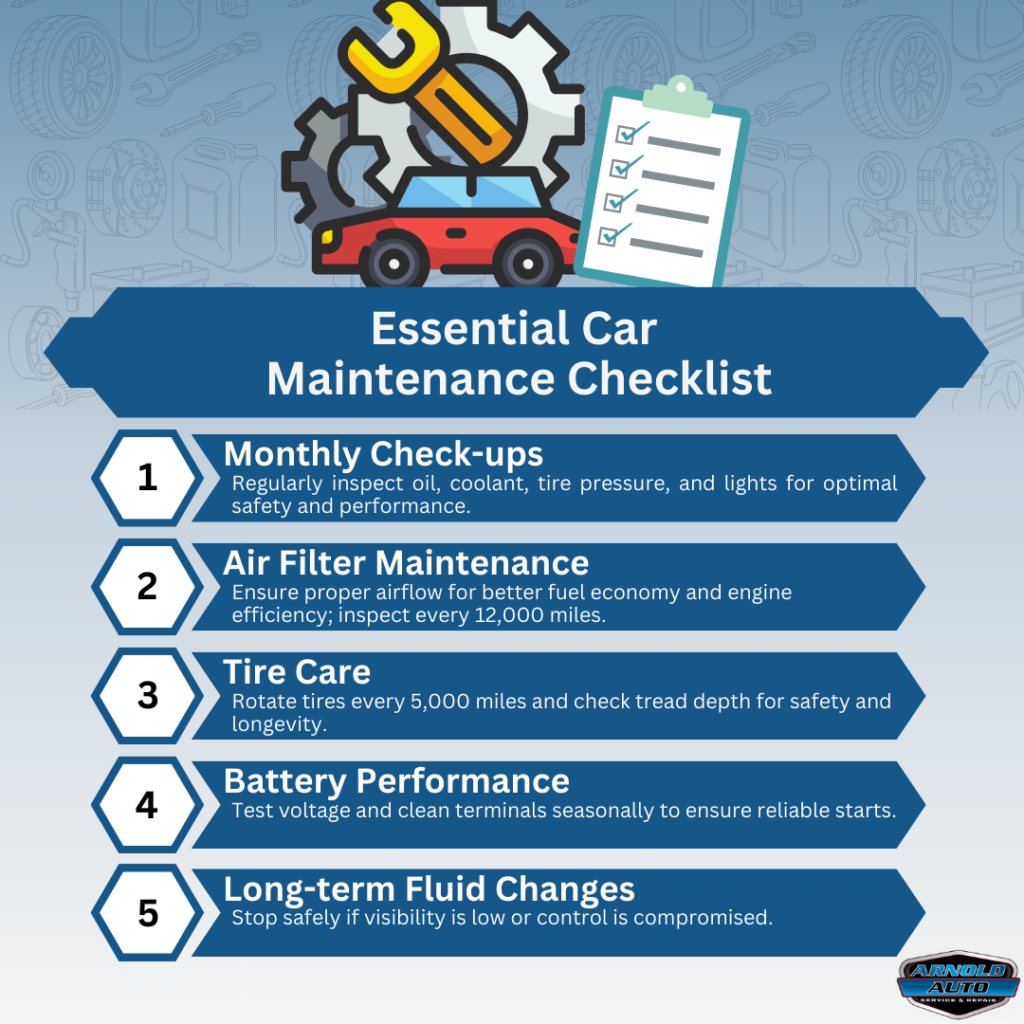
Every Month:
Quick checks you can do in under five minutes.
- Tire pressure
- Coolant level
- Oil level
- Windshield washer fluid
- Visual inspection for leaks
- Exterior lights
These little looks can catch problems early—before they become expensive.
Every 3,000–5,000 Miles (or 3–6 Months):
This is the “core” maintenance interval.
- Oil change
- Tire rotation
- Brake check
- Fluid top-offs
- Air filter inspection
- Battery inspection
- Steering & suspension quick-check
If anything here feels off—vibration, pulling, slow starts—it’s worth scheduling diagnostics or repairs.
Every 15,000 Miles:
More in-depth services begin around this range.
- Cabin air filter replacement
- Engine air filter change (more often in dusty areas)
- Throttle body cleaning
- Brake fluid testing
Every 30,000 Miles:
A major maintenance milestone.
- Transmission fluid check
- Spark plug inspection or replacement
- Fuel system cleaning
- Brake inspection (pads, rotors, calipers)
- Coolant condition check
The transmission check is especially important if you drive in the mountains or tow. If you notice slipping, slow shifting, or shuddering, get Transmission Repair in Ogden UT.
Every 60,000 Miles:
This is when wear-and-tear starts getting more serious.
- Transmission service
- New spark plugs (if not replaced earlier)
- Power steering service
- Brake fluid replacement
- Drive belt inspection
- Suspension inspection
- New battery (depending on age)
Worn belts or aging suspension components often become noticeable around this mileage.
Every 90,000–100,000 Miles:
The big-ticket maintenance interval for most modern vehicles.
- Timing belt replacement (if equipped)
- Water pump replacement (often paired with timing belt)
- Major fluid service
- Full tune-up
Skipping these milestones can lead to catastrophic engine damage—timing belts in particular can fail without warning.
Step 3: Adapt the Schedule for Ogden’s Climate
Ogden’s weather is no joke—winter snows, summer heat, and drastic temperature swings all stress your vehicle.
Winter:
- Battery checks
- Heater & defroster inspection
- Tire tread & pressure
- New wiper blades
- Coolant strength test
Summer:
- A/C performance
- Coolant level and condition
- Tire pressure (heat raises PSI)
- Belt and hose inspection
Temperature extremes shorten the life of fluids, rubber components, and electrical systems.
Step 4: Add Seasonal & Annual Tasks
Every Fall:
- Cooling system inspection
- Battery load test
- Tire changeover (winter or all-season)
- Brake inspection
Every Spring:
- Post-winter undercarriage cleaning
- Alignment check
- Tire rotation or replacement
- Suspension inspection
Once Per Year:
- Full inspection
- Brake fluid test
- AC performance check
- Tire alignment review
These annual habits keep your schedule balanced.
Step 5: Create a Simple Tracking System
Tracking maintenance saves headaches later.
You can use:
- A notes app
- A small notebook
- A spreadsheet
- A scheduling app
- Your vehicle’s infotainment reminders
Record:
- Date
- Mileage
- What was done
- What needs checking next
This makes maintenance less overwhelming and more structured.
Frequently Asked Questions
What Maintenance Does a Car Need Monthly?
Monthly checks aren’t complicated, but they are incredibly helpful.
Monthly maintenance should include:
- Checking oil level
- Checking tire pressure
- Inspecting lights
- Refilling washer fluid
- Listening for unusual sounds
- Checking for leaks
- Ensuring smooth braking
- Cleaning interior vents
Most of these take less than two minutes but help prevent major problems.
When to Consult a Professional
Even a great schedule can’t replace professional diagnostics. Visit Arnold Auto Repair when:
- You hear new noises
- The vehicle pulls to one side
- You feel vibration while driving
- Warning lights appear
- The engine struggles or misfires
- Shifting becomes rough
- Fuel economy drops suddenly
- You notice fluid leaks
A Smart Maintenance Schedule Keeps Your Car Running Longer
Creating a maintenance schedule isn’t about being perfect—it’s about staying proactive. A well-maintained vehicle drives smoother, lasts longer, and keeps you safer on every mile of road in and around Ogden.
Whether you need help understanding what your car actually needs, want an inspection, or simply prefer professionals to handle the maintenance, Arnold Auto Repair is here for you.
Need Car repair in Ogden? Schedule An appointment or call and we’ll help.