There’s nothing quite like the anticipation of a long road trip. Bags packed. Snacks ready. Playlist queued. Whether you’re heading to visit family, exploring Utah’s national parks, or crossing several states on an adventure, there’s excitement in the air.
But road trips also test your vehicle in ways everyday driving doesn’t—long distances, changing weather, heavy cargo, and extended time at highway speeds.
The last thing you want is a breakdown on a remote stretch of I-15 or a warning light appearing halfway through Nevada. The good news? Preparing your vehicle doesn’t have to be complicated. With a handful of essential safety checks, you can dramatically reduce the odds of trouble.
Let’s walk through the five most important safety checks before you hit the road.
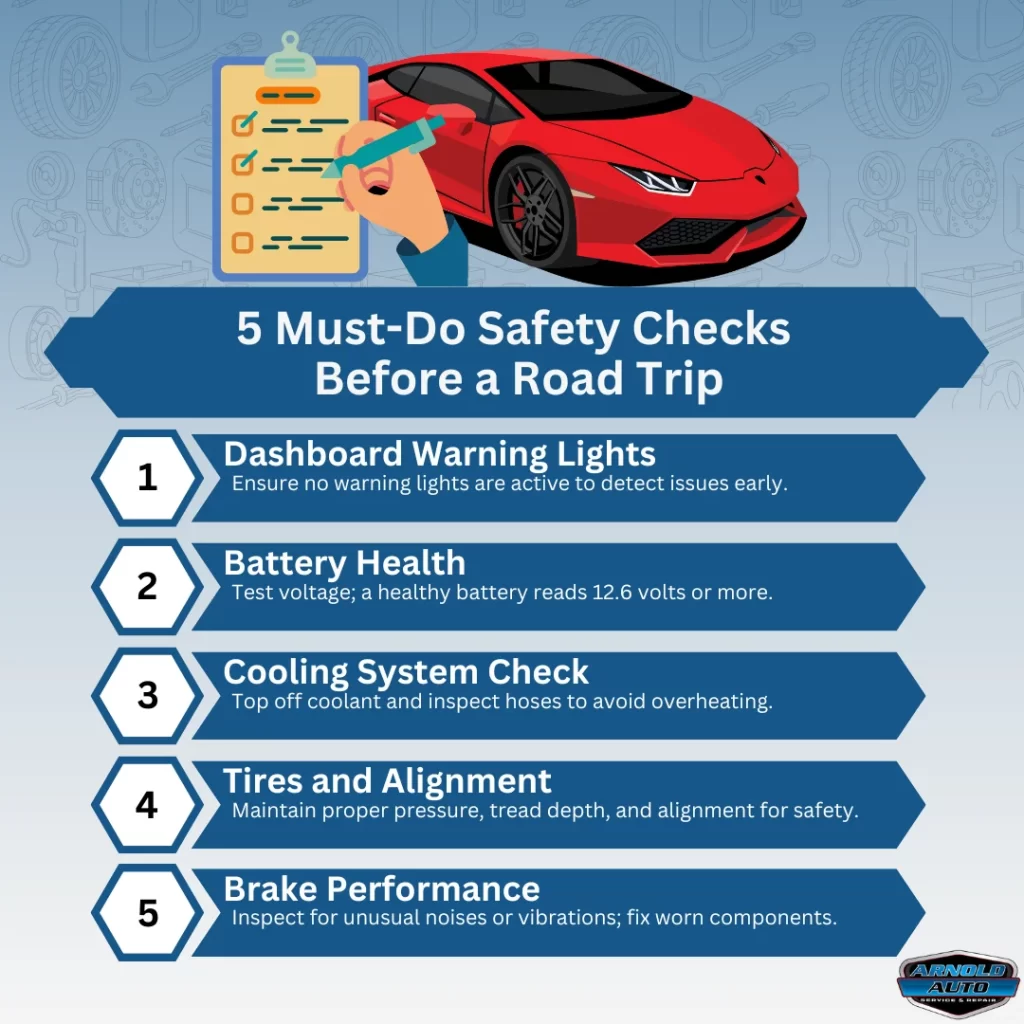
1. Inspect Your Tires Thoroughly (Your Safety Depends On It)
Your tires are the only part of your vehicle that actually touches the road. Their condition will directly affect steering, braking, fuel efficiency, and stability.
What to check:
Tread depth
Make sure you’ve got at least 2/32″ of depth. If you’re unsure, the penny test still works—if you can see all of Lincoln’s head, it’s time to replace the tire.
Tire pressure
Underinflated tires overheat. Overinflated tires lose grip. Both are dangerous at high speeds. Check pressure when the tires are cold.
Uneven wear
If one tire looks more worn than the others—especially on one edge—alignment or suspension issues may be the cause. Get these checked before your trip.
If the wear pattern seems strange, the safest move is a quick inspection or Suspension and Steering Repair in Ogden UT to make sure nothing hidden will cause trouble down the road.
2. Check Your Brakes for Performance and Wear
Brakes rarely fail suddenly; they slowly degrade over time. That makes pre-trip brake checks critical.
Signs your brakes need attention before a road trip:
- Grinding or squealing
- Vibrations during braking
- Longer stopping distances
- Soft or spongy pedal feel
- Pulling to one side during braking
If you’re hearing, feeling, or sensing anything unusual, it’s better to address it before hundreds of highway miles amplify the issue.
3. Test Your Battery and Electrical System
Nothing kills road trip excitement faster than a dead battery at a gas station two hours from home. Batteries weaken gradually, especially in areas with seasonal temperature changes like Ogden UT.
Check for:
- Slow engine cranking
- Dim lights at idle
- Corroded battery terminals
- Battery age over 3–5 years
- Electrical accessories behaving oddly
If you’re unsure your battery will hold up through long drives, heat, cold, or nighttime travel, get it tested.
Long trips also stress alternators—hours of powering lights, A/C, charging phones, and running entertainment systems. Electrical testing ensures everything works consistently.
4. Verify Fluid Levels and Condition
Your vehicle relies on several fluids to cool, lubricate, and protect its major systems. Before a long trip, checking fluids is one of the simplest ways to prevent overheating or component damage.
Check these fluids:
- Engine oil
- Transmission fluid
- Coolant
- Brake fluid
- Power steering fluid
- Windshield washer fluid
Each plays a vital role, especially during long-distance travel.
If you’re planning to tow, drive through mountains, or travel in extreme temperatures, proper fluid levels matter even more.
5. Ensure Lights, Wipers, and Safety Features Are Working
This is one of the most overlooked categories, yet crucial for safe travel.
Check all exterior lights:
- Headlights
- Brake lights
- Turn signals
- Reverse lights
- Fog lights
- Hazard lights
Check your wipers:
- Replace if streaking
- Replace if skipping
- Replace if the rubber feels dry or cracked
Vision is everything when you’re driving long stretches—especially through unfamiliar areas, construction zones, or nighttime conditions.
Frequently Asked Questions
What Should I Check on My Car Before a Long Trip?
Here’s a quick summary:
Emergency kit → jumper cables, flashlight, first-aid kit, tools, water
Tires → tread, pressure, alignment
Brakes → pads, fluid, responsiveness
Battery → age, voltage, terminal corrosion
Fluids → oil, coolant, brake, washer
Lights & Wipers → essential for visibility
Suspension → stability and steering control
Extra Safety Steps for Ogden Drivers
Ogden’s blend of mountain routes, winter weather, and rural highways means drivers should take a few additional precautions.
Winter or cold-weather trips:
- Pack blankets and warm clothing
- Carry tire chains
- Keep the gas tank above half
- Monitor road conditions
Summer trips:
- Watch coolant levels
- Inspect belts and hoses
- Carry extra water
- Monitor engine temperature on steep climbs
Mountain driving:
- Use lower gears on descents
- Watch for wildlife
- Avoid riding the brakes
Red Flags That Mean You Shouldn’t Start Your Trip Yet
Delay your trip and get your vehicle inspected if:
- Your car shakes at certain speeds
- The steering wheel vibrates
- You smell something burning
- Dashboard lights come on
- You hear grinding or clunking noises
- Your engine struggles to start
- Your A/C only works intermittently
- Your car pulls to one side
These signs often point to mechanical issues that become dangerous during long-distance travel.
A Smooth Trip Starts With Smart Preparation
A road trip should be fun, memorable, and stress-free. With a little preparation, you can prevent breakdowns, avoid roadside emergencies, and keep your family safe on every mile of the journey.
Whether you need a pre-trip inspection, brake check, suspension evaluation, or full diagnostic, the technicians at Arnold Auto Repair are here to help.
For dependable, Auto Service in Ogden, give us a call or book online.