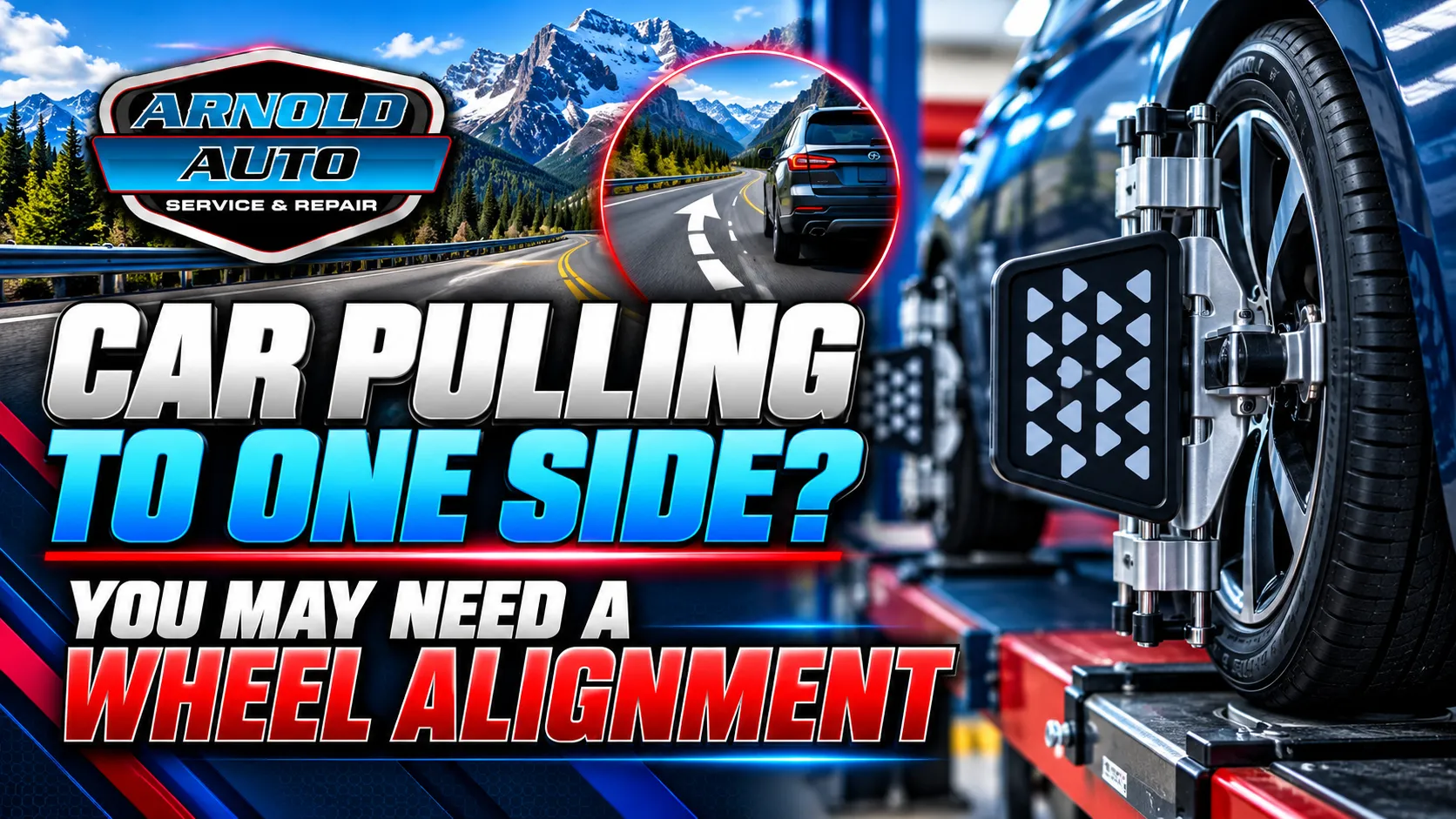
A car pulling to one side may need a wheel alignment, but tire pressure, brake drag, or worn suspension parts can cause the same symptom. At Arnold Auto Repair, we check these possible causes before using precise measurements to fix a car pulling to one side.
Why Is Your Car Pulling to One Side?
Your car may pull because its wheel angles have shifted. The road, tires, brakes, and steering parts can also affect how it tracks.
Alignment Angles Can Shift
Camber, caster, and toe control how each tire meets the road. A pothole, curb strike, or worn part can move these angles outside specification and cause a steady drift.
Ogden’s freeze-thaw cycles can create sharp potholes on Wall Avenue and Harrison Boulevard. The Utah Department of Transportation explains how potholes form as moisture freezes, expands, thaws, and weakens pavement. One impact can also damage a wheel, tire, or steering part.
Tire Problems Can Mimic Misalignment
Unequal tire pressure is one of the first things to check. A low or damaged tire can have more rolling resistance and make the vehicle drift toward that side.
Regular tire rotation and inspection reveals tread differences early. Rotation cannot reverse existing wear, but the pattern can identify whether alignment, balance, or suspension needs attention.
Brake Drag and Road Crown Matter
A sticking brake caliper can pull the vehicle while braking and may create heat or a burning smell. Alignment will not correct this problem.
Most roads slope toward the shoulder for drainage. A mild drift there can be normal, but a strong pull on flat pavement needs attention.
Signs You Need a Wheel Alignment
The clearest signs you need a wheel alignment are steady pulling, an off-center steering wheel, and uneven tire wear. A recent impact adds reason to check.
The Steering Wheel Sits Off-Center
Your steering wheel should sit close to level while traveling straight. If it stays turned on a flat road, toe or thrust angle may be outside specification.
Tire Tread Wears Unevenly
Feathered tread or faster wear on one shoulder can point to toe or camber problems. Cupped spots may suggest wheel imbalance or worn shocks. Our suspension, steering and wheel services cover the parts that must hold alignment.
The Pull Started After an Impact
A new pull after hitting a pothole or curb deserves an inspection, especially with vibration, noise, or tire damage. Rough surfaces on I-15, US-89, and through Ogden Canyon can shift an adjustment or expose a weak part.
Vehicle design affects the correct alignment settings. Our Ford service and diagnostics cover models such as the F-150, Escape, and Explorer when pulling is part of a broader handling problem.
How We Diagnose the Pull
We confirm when the pull happens, check the tires and suspension, and measure alignment angles. An alignment cannot repair a damaged tire or loose joint.
Road Test and Tire Check
We road-test the vehicle and note whether it pulls while cruising, braking, or accelerating. We compare tire pressure, tread condition, and wheel condition at all four corners.
Steering and Suspension Inspection
Next, we inspect tie rod ends, ball joints, control arm bushings, wheel bearings, shocks, and struts. A loose part can change wheel position under load and prevent the vehicle from holding alignment.
Alignment Measurement
Our Hunter equipment measures camber, caster, toe, and thrust angle against vehicle specifications. We explain the readings and provide a written estimate. After approved adjustments, we verify the final measurements and road-test the vehicle.
Can You Keep Driving When Your Car Pulls?
You may drive a short distance when the pull is mild and there is no tire damage, vibration, noise, or brake issue. Schedule an inspection soon because misalignment can shorten tire life. Stop driving when the pull is severe, a tire is damaged, the steering feels loose, or one wheel smells hot. Move to a safe location and arrange help.
Takeaways
A car pulling to one side can result from shifted alignment angles, tire trouble, brake drag, road crown, or worn steering parts. A full check helps avoid the wrong repair.
For wheel alignment in Ogden, UT, a road test, tire inspection, suspension check, and measured alignment reading provide the clearest answer. Early diagnosis may protect usable tread after an impact.
Frequently Asked Questions
Why does my car pull to the right?
Your car may pull right because of low tire pressure, tire wear, a shifted alignment angle, brake drag, or normal road crown. If the car pulls to the right on level pavement, an inspection can separate a tire problem from alignment or suspension wear.
Can low tire pressure cause my car to pull?
Yes, low tire pressure can make a car pull toward the underinflated tire because that tire has more rolling resistance. Set all four tires to the pressure on the driver’s door-jamb label, then have the tire checked if it loses air again.
Will a wheel alignment stop my car from pulling?
A wheel alignment can stop the pull when incorrect camber, caster, toe, or thrust angle is the cause. It will not correct a damaged tire, sticking brake, bent part, or loose suspension joint, so those items should be checked first.
How long does a wheel alignment take?
Most standard alignments take about one hour after the vehicle is inspected. Worn parts, seized adjustment hardware, or vehicle modifications can add time because those issues may need attention before accurate adjustment is possible.
Should I get an alignment after hitting a pothole?
Yes, an alignment check is sensible after a hard pothole hit if the steering wheel moves off-center, the vehicle starts pulling, or a tire shows new damage. Even without an obvious change, inspect the tire and wheel promptly when the impact was severe.
Schedule Wheel Alignment in Ogden, UT
If your vehicle no longer tracks straight, Arnold Auto Repair can inspect the tires, steering, suspension, and alignment angles before recommending work. Use our contact form or call (801) 395-0666 to schedule an evaluation.
Our shop is located at 1401 Wall Avenue, Ogden, UT 84404. We will explain what we find and provide a written estimate before approved service begins.