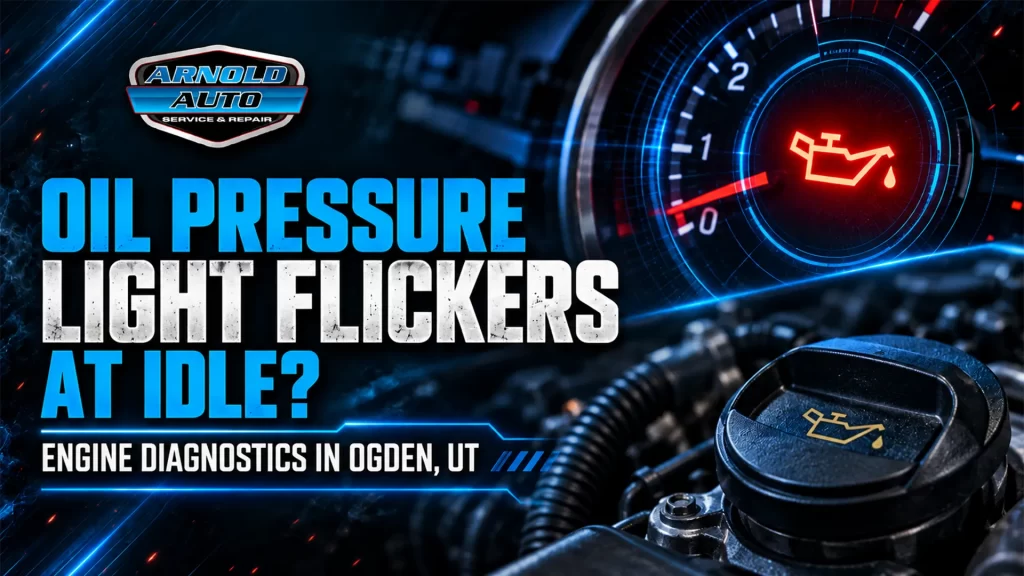
If your oil pressure light flickers at idle, shut off the engine as soon as you can do so safely. Low oil, an electrical fault, or actual pressure loss may be responsible. At Arnold Auto Repair, our engine diagnostics in Ogden, UT, can separate a sensor problem from a lubrication concern.
The red oil-can symbol is different from an oil-life reminder. It warns about the pressure that moves oil through the engine. Respond even when the light goes out as you accelerate.
What a Flickering Oil Pressure Light Means
A flicker means the warning circuit sees pressure near or below its set limit. The dashboard cannot show whether the engine has enough pressure.
Why the Light May Flicker at a Warm Idle
Oil pressure is often lowest when a warm engine idles. The oil is thinner, and the pump turns slowly. A marginal system may trigger the light at a stop, then turn it off as engine speed rises.
That pattern does not make low oil pressure at idle normal. Ogden drivers may notice it after Wall Avenue traffic or an I-15 commute. The symptom still needs testing against the manufacturer’s specification.
How It Differs From an Oil Change Reminder
An oil-life message tracks maintenance, while an oil pressure warning light reports a possible lubrication problem. Resetting a reminder will not restore pressure. If service is due, our oil change in Ogden, UT, uses the specified oil and filter.
Fresh oil can help when old oil is degraded or the wrong grade was installed. It cannot replace pressure testing when the red light appears.
Common Causes of Low Oil Pressure at Idle
Possible causes include low oil, incorrect viscosity, a restricted filter or pickup, internal wear, and a faulty pressure switch. Several faults can create the same warning.
Low Oil Level or the Wrong Oil
A low level can let the pump draw air during turns, braking, or a sloped stop. Leaks and oil use may lower the level without a large puddle. Oil that is too thin can also reduce hot-idle pressure.
Ogden’s cold winters and warm summers make the specified viscosity useful across seasons. Follow the oil cap or owner’s manual instead of guessing by weather.
A Faulty Sensor or Wiring Problem
A worn oil pressure switch may send a false warning. Damaged wiring, a loose connector, or oil inside the connector can also create a flicker. Scan data may help on some vehicles, but it does not replace direct pressure measurement.
Internal Wear, a Restricted Pickup, or a Weak Pump
Worn bearings can lose pressure through enlarged clearances when oil is hot. Sludge may restrict the pickup, while a worn pump or sticking control valve can limit flow. Continued operation may damage the engine.
For local Ford owners, our Ford repair and maintenance service covers routine care and diagnostics. Pressure specifications still vary by engine, so testing must match the vehicle.
What to Do When the Oil Pressure Light Flickers
Treat the warning as a reason to stop and check. The next step depends on your location and whether the light returns.
Shut Off the Engine and Check the Oil Level
Move to a safe location, turn off the engine, and wait on level ground. Check the dipstick only if it is safe. If the level is low, add the correct oil without overfilling.
Do not investigate beside a busy freeway. If a failure stops you on I-15, Utah freeway breakdown guidance advises calling 911 and remaining belted inside until help arrives.
Arrange a Tow When the Warning Returns
Do not drive if the light stays on, returns after correcting the level, or comes with ticking, knocking, or rising temperature. Shut off the engine and arrange a tow. Continued operation without pressure can cause costly damage.
How Engine Diagnostics Find the Cause
A sound diagnosis confirms actual oil pressure before parts are recommended. It checks the oil, filter, sensor circuit, and engine condition to find the cause.
Verify the Oil, Filter, and Visible Leaks
First checks cover oil level, viscosity, condition, and service history. Filter type and installation can affect flow. A technician also checks for leaks, contamination, and metal in the oil.
Measure Actual Oil Pressure
A mechanical gauge measures pressure at hot idle and a specified higher speed. Readings are compared with the manufacturer’s limits. Normal pressure points toward the circuit, while low pressure directs inspection toward the lubrication system.
Test the Sensor and Inspect Related Clues
Test the sensor, connector, and wiring after pressure is known. Codes and live data may add context. If the engine also runs rough, loses power, smokes, or makes a new sound, our guide to early warning signs of engine trouble covers other useful clues.
Takeaways
A flickering oil pressure warning light may come from low oil, wrong viscosity, a faulty sensor, a restricted pickup, a worn pump, or internal wear. It often appears after warmup, but it is not safe to dismiss.
Shut off the engine, check the level from a safe location, and do not drive if the warning returns. A direct test separates an electrical warning from true pressure loss.
Frequently Asked Questions
Is it safe to drive with a flickering oil pressure light?
No, continued driving is not a safe assumption until actual oil pressure is verified. Stop the engine as soon as you can do so safely, then arrange inspection or towing if the warning returns.
Can a bad oil pressure sensor cause the light to flicker?
Yes, a failing sensor, loose connector, or damaged wire can make the light flicker. A mechanical pressure test should confirm that engine pressure is normal before the sensor is blamed.
Will an oil change fix low oil pressure at idle?
An oil change may fix low oil pressure at idle if the cause is degraded oil, incorrect viscosity, a restricted filter, or a low oil level corrected during service. However, it will not repair a worn pump, damaged bearings, a blocked pickup, or a faulty warning circuit.
Why does the light appear only when the engine is warm?
Warm oil is thinner, and pressure is usually lowest at idle when pump speed is low. A marginal lubrication system may cross the warning threshold only after the engine reaches operating temperature.
How is low oil pressure diagnosed?
Low oil pressure is diagnosed by checking oil level and condition, verifying the filter and viscosity, and measuring pressure with a gauge. The results are compared with engine-specific limits before the sensor circuit or internal components are evaluated.
Schedule Oil Pressure Diagnostics in Ogden
Arnold Auto Repair checks warning-light complaints for drivers across Ogden and Weber County. Our shop is at 1401 Wall Avenue, Ogden, UT 84404. Call (801) 395-0666 or contact our Ogden shop to schedule an inspection, and tell us whether the light appears cold, warm, at idle, or while driving.