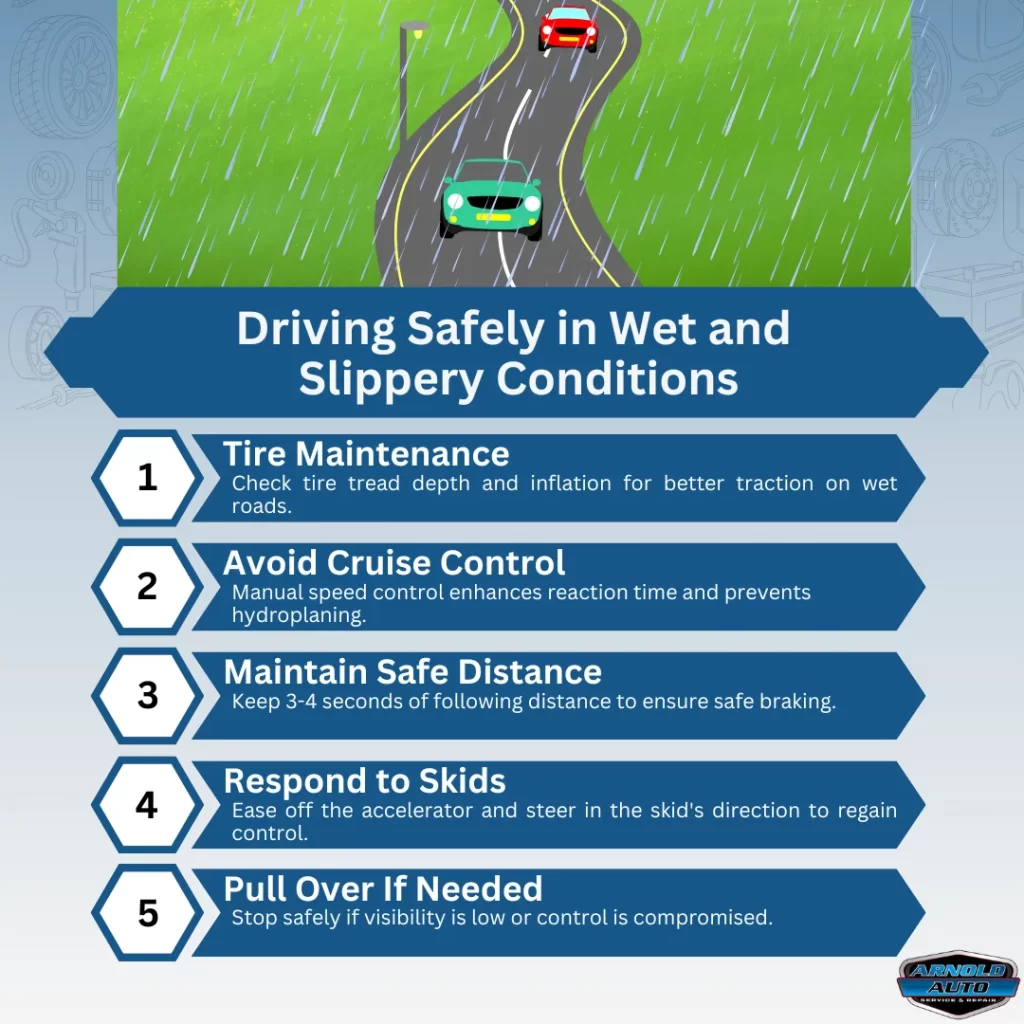
Driving in wet or slippery conditions requires heightened awareness and precautions. First, ensure your vehicle’s tires have sufficient tread and are properly inflated. Avoid using cruise control, as it can reduce your reaction time on slick surfaces. Always slow down and maintain a greater following distance—aim for at least three to four seconds behind the car ahead. If you start to skid, ease off the accelerator and steer in the direction you want to go. If visibility worsens, don’t hesitate to pull over in a safe spot. For additional insights on staying safe, keep exploring the topic further.aIf you’ve ever driven through a sudden downpour on Harrison Blvd., rolled across a slick patch of ice near the canyon, or watched rainwater pool up on Washington Boulevard, you know just how quickly the roads in Ogden UT can go from calm to slippery.
Wet conditions challenge even experienced drivers, and what seems like a minor drizzle can hide serious hazards—hydroplaning, invisible oil slicks, sudden braking zones, and unpredictable traction.
Driving safely in wet or slippery conditions isn’t just about “slowing down.” It’s understanding how your tires, brakes, visibility, and reaction time all change when the road is wet. And fortunately, a few smart driving habits can dramatically reduce your risk.
Here’s a practical, conversational guide—straight from technicians who see the results of wet-weather mishaps every season—on how to stay safe when the roads get slick.
1. Slow Down Earlier—and More Than You Think
The most important rule of wet-weather driving: your stopping distance doubles (or more) when the pavement is wet. Even light rain makes a thin, oily film on the road before the water washes it away.
Why slowing down matters:
- Tires have less grip
- Brakes take longer to respond
- Hydroplaning becomes more likely
- Steering input becomes more sensitive
Simple adjustment:
Whatever speed feels “fine,” drop it a little more. Your reaction time stays the same—but your tires’ ability to help you respond changes dramatically.
2. Maintain Safe Following Distance (The Real-Life “3–6 Second Rule”)
Following too closely is one of the biggest causes of wet-weather accidents. Keeping distance gives you time to react to sudden stops, puddles, debris, or sliding vehicles.
Use this guideline:
- 3 seconds in dry conditions
- 4–5 seconds in light rain
- 6+ seconds during heavy rain or slush
And remember—headlights on, distractions off.
3. Check Your Tires Before Driving—Traction Matters
You can be the safest driver in the world, but if your tires can’t grip, the road decides your fate. Tires lose a huge percentage of traction as tread depth wears down, especially in wet conditions.
Before driving in the rain, check:
- Tread depth (minimum 2/32″)
- Tire pressure (heat/cold in Ogden can shift PSI by 2–4 points)
- Uneven wear (may signal alignment or suspension issues)
- Cracks or bulges
Tires in poor condition hydroplane easily—even at speeds as low as 35 mph.
If your vehicle struggles with slow cranking, dim lights, or unpredictable electrical performance during storms, it may be more than traction—you may need an Auto Battery Replacement in Ogden UT to ensure strong electrical support for ABS, traction control, wipers, and lights.
4. Avoid Sudden Movements—Drive Smooth and Steady
Wet roads punish abrupt actions. Sudden braking, sharp steering, and fast acceleration all increase the chance of sliding or hydroplaning.
Smooth driving looks like:
- Gradual acceleration
- Controlled braking
- Slow, steady turning
- Gentle steering corrections
If you hydroplane, the right move is counterintuitive:
Don’t brake. Don’t turn sharply. Ease off the accelerator and steer gently in the direction you want to go.
5. Keep Lights, Wipers, and Defrosters in Good Condition
Visibility is everything in wet conditions—even the slightest haze on the windshield can distort depth perception.
Make sure:
- Wipers are replaced every 6–12 months
- Headlights are clear and bright
- Defrosters work properly
- Brake lights are functioning
- Windshield interior is clean (fog builds faster on dirty glass)
Most hydroplaning accidents start with the simple phrase “I couldn’t see.”
Ogden’s changing weather—especially during spring and fall—causes sudden fog and temperature transitions. Staying ahead of visibility issues is one of the most effective safety strategies.
Frequently Asked Questions
How Do I Stop My Car From Sliding on Wet Roads?
Great question—drivers search this every rainy season.
Best prevention:
- Slow down
- Maintain tread depth
- Keep tires properly inflated
- Brake gradually
- Avoid puddles when possible
- Don’t use cruise control in heavy rain
If your car begins sliding:
- Stay calm
- Ease off the accelerator
- Don’t slam the brakes
- Steer gently
- Allow tires to regain traction
What speed is considered dangerous when it’s wet? Hydroplaning can begin at as low as 35 mph—even lower with worn tires.
Why Slippery Roads Are More Dangerous in Ogden
Driving in Ogden is unique because we deal with:
- Sudden downpours
- Snow → melt → refreeze cycles
- Oil buildup on dry roads after long periods without rain
- Mountain runoff and debris
- Shady canyon areas that stay slick longer
- High-traffic roads with polished, low-friction surfaces
That’s why local drivers must stay extra aware of wet-road risks.
When It’s Time to Get Your Car Checked
Wet-weather problems often reveal underlying issues you may not notice during dry conditions. Schedule a check-up if you experience:
- Vibrations while braking
- Difficulty accelerating
- A/C fogging that won’t clear
- Dim headlights or slow electrical performance
- Pulling to one side
- Tires wearing unevenly
- Warning lights during storms
Electrical problems, weak batteries, worn tires, and suspension issues get way more noticeable (and dangerous) in slick conditions.
For safe, reliable performance in all weather, schedule service with your trusted Professional Mechanic Ogden Utah.
Wet Roads Don’t Have to Be Scary
Driving safely in wet or slippery conditions isn’t about being nervous—it’s about being prepared. With good traction, proper visibility, smooth driving habits, and a well-maintained vehicle, you can handle Utah’s rainstorms and unpredictable weather with confidence.
The team at Arnold Auto Repair is here to help keep your vehicle road-ready, rain or shine. If you want a safety inspection—or just peace of mind before the next storm—stop by anytime.